
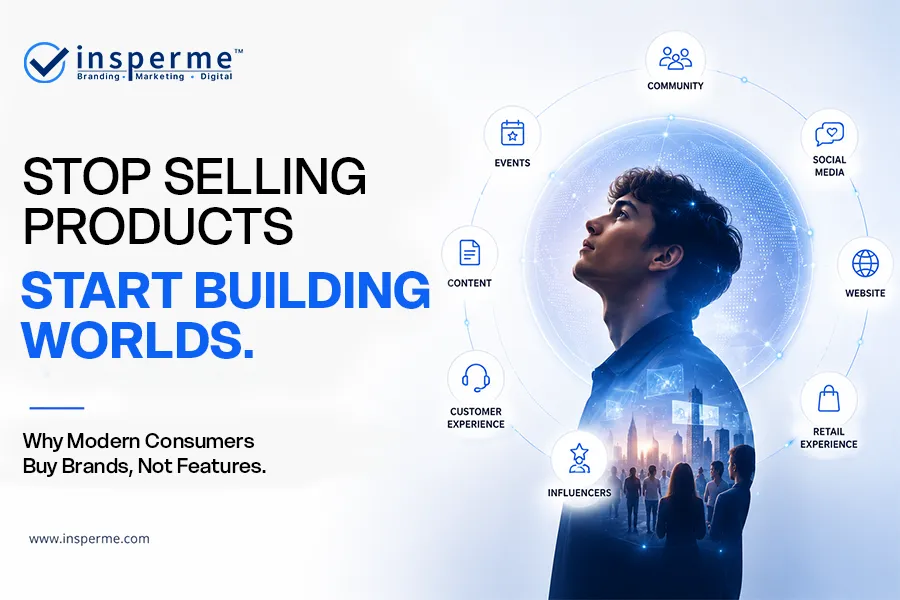
Stop Selling Products. Start Building Worlds.
For years, marketing focused on promoting product features, functional benefits, and sales campaigns. But today’s consumers—especially Millennials and Gen Z—buy differently. They don’t just buy products; they buy identities, communities, experiences, and most importantly, a sense of belonging.
This shift marks the evolution from traditional marketing to modern brand building. Earlier, brands focused on products, customers, and sales funnels. Today, successful brands focus on meaning, emotional benefits, ecosystems, communities, and continuous engagement of the products/services they offer.
Modern consumers no longer ask, “Is this product good?” Instead, they ask, “Is this brand for people like me?” Purchasing decisions are increasingly driven by personal identity and emotional connection rather than features alone.
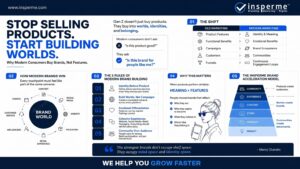
This is why every customer touchpoint must feel like part of the same brand universe. Content, social media, websites, packaging, retail experiences, influencers, customer service, and events should all tell a consistent story. When every interaction reinforces the same values and personality, brands become more memorable and trusted.
To build a strong brand world, businesses should follow five key principles:
- Identity Before Product – Define who customers become when they choose your brand.
- Build Worlds, Not Campaigns – Create a connected experience across platforms.
- Emotional Differentiation – Features can be copied; feelings cannot.
- Cohesive Experiences – Ensure consistency across every touchpoint.
- Community Over Audience – Encourage participation, not just transactions.
At Insperme, we call this the Brand Acceleration Model: Insight → Product → Story → Content → Experience → Community. Products create customers, stories create brands, and communities create movements.
The strongest brands don’t occupy shelf space—they occupy mind space and identity space.