
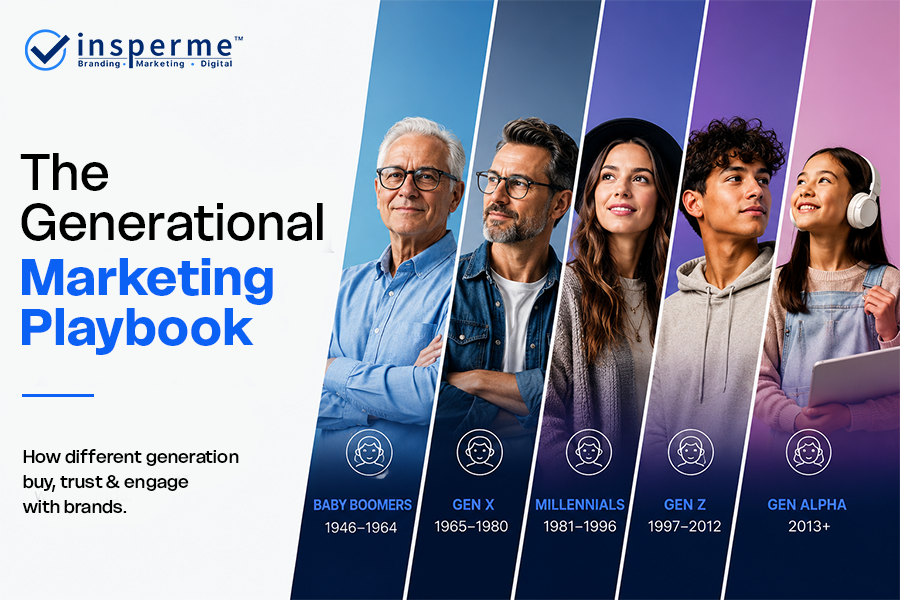
The Generational Marketing Playbook
Why One Marketing Message No Longer Works
Marketing has never been about reaching everyone—it has always been about understanding who you’re talking to. Today, that challenge is bigger than ever because every generation sees brands differently, trusts different sources, and makes buying decisions for different reasons.
Baby Boomers (1946–1964) are driven by trust, reliability, service, and simplicity. They respond to established brands, expert recommendations, and personal relationships. Traditional channels like email, phone, print, and WhatsApp continue to work well for this audience.
Gen X (1965–1980) values practicality, independence, efficiency, and value. They trust product demonstrations, testimonials, reviews, and comparisons. Google Search, YouTube, email, and Facebook remain their preferred channels.
Millennials (1981–1996) seek purpose, experiences, authenticity, and community. They engage with brand stories, social proof, influencer recommendations, and values-driven brands. Instagram, YouTube, LinkedIn, and podcasts are highly effective platforms for reaching them.
Gen Z (1997–2012) is motivated by identity, self-expression, entertainment, and belonging. Creators, short-form videos, trends, and authentic content influence their decisions. Instagram Reels, TikTok, and YouTube Shorts dominate their attention.
Gen Alpha (2013+) is growing up in a digital-first world. They are driven by play, curiosity, personalization, and instant gratification. Interactive experiences, gamification, AI-powered engagement, and immersive content shape how they connect with brands.
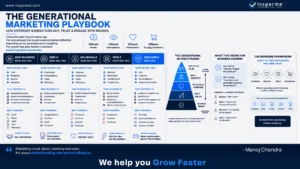
As generations evolve, priorities shift from Trust (Boomers) to Value (Gen X), Purpose (Millennials), Identity (Gen Z), and Play (Gen Alpha).
For businesses, the key question is no longer “How do I market this product?” Instead, ask “How does each generation perceive this product?” The most successful brands adapt their messaging, visuals, content, channels, and offers to match audience psychology.
At Insperme, we believe the brands that grow fastest are the ones that understand different minds, different perceptions, different motivations, and different buying behaviors. Because when you adapt to your audience’s psychology, you earn their attention, trust, and ultimately, their loyalty.